

gopfaster/iStock via Getty Images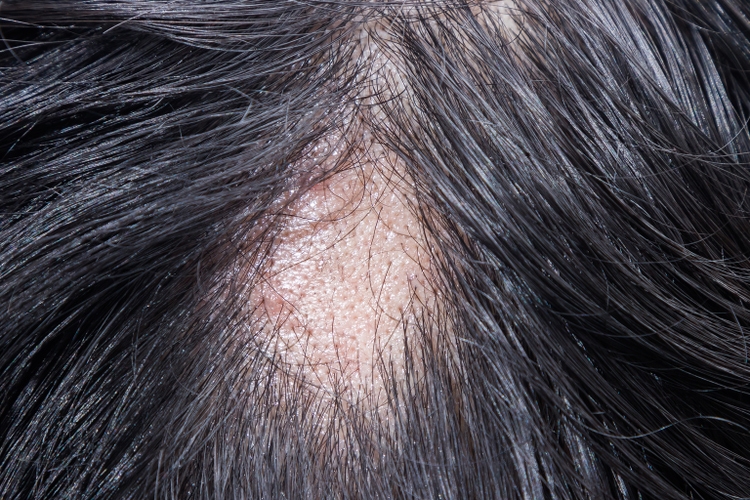
Summary
Concert Pharmaceuticals (NASDAQ:CNCE) has developed CTP-543 which may be a best-in-class JAK inhibitor for the treatment of alopecia areata based on the first of two pivotal trials. Data from the second phase 3 trial is on schedule to be released in Q3 of 2022. There is a true unmet need for treatments for AA. However, investors should be aware there are 3 JAKs likely to compete for market share and the market for JAKs in AA may be smaller than the 1.5 million figure the company cites.
Alopecia Areata
Alopecia areata (AA) is an autoimmune disease where lymphocytes attack the lower part of the hair follicles causing hair loss. It is a chronic condition where patients may lose circular hair patches or experience complete hair loss. It can broadly be divided into three types- coin-sized patches on the scalp, a total loss of hair on the scalp and a complete loss of hair on the scalp, face and body. The course of the disease is unpredictable and hair may regrow or hair loss can extend to additional locations. Some cases will resolve spontaneously.
Available treatments
There are few effective treatments for AA and the first FDA approval in this indication happened this week. Dermatologists can prescribe topical immunotherapy and/ or treatments such as anthralin which are applied to the scalp. These act as irritants and stimulate hair growth. Immunotherapy via topical contact allergens is effective in 50-60% of patients but can cause reactions such as dermatitis and blistering. These treatments are not FDA approved.
Steroids delivered orally, topically or by injection have some efficacy but also pose risks. Patients can experience skin thinning, stretch marks, telangiectasia (spider veins) and hypopigmentation with prolonged use. Lastly, steroids can cause Cushing syndrome which is a rare but serious adverse event. Steroids may be best suited for mild cases where injections can be effective on small patches with limited side effects.
Minoxidil can also be utilized to increase hair growth but tends not to be effective in severe cases.
JAK inhibitors are the first FDA approved treatment for Alopecia Areata
Currently, there are three JAK inhibitors which are either in late-stage testing or approved for severe AA. Efficacy for a treatment for AA is determined using the SALT score where 0% is no scalp hair loss and 100% is total scalp hair loss. A SALT score of 20 is less is an endpoint used in clinical trials. The 20 % or less loss gives a patient 80 % scalp coverage. Patients enrolled in AA trials generally have severe alopecia where they had have lost at least half of their scalp hair.
Lilly and Incyte released data on their JAK inhibitor, baricitinib, from their phase 3 trials. The primary endpoint was the percentage of patients with a SALT score of 20 or less. Lilly and Incyte’s Brave-AA1 and AA2 studies showed that baricitinib 4mg/day resulted in 35% and 33% of patients respectively achieving SALT scores of 20 or less after 36 weeks of treatments. Those figures were 22 % and 17% for the 2 mg/day dose.
Pfizer enrolled 719 patients in their Ph. 2/3 Allegro ritlecitinib trial who had greater than 50% scalp hair loss due to AA. Pfizer released limited data making a direct comparison difficult. The press release noted that a greater proportion of patients reached a SALT score ≤20 than placebo after 24 weeks of treatment and indicated that the study met the primary efficacy endpoint.
Concert Pharmaceuticals’ Thrive-AA1 study which enrolled 706 patients showed that 30% of the patients taking 8 mg BID and 42% of the patients taking 12mg BID met the primary endpoint of achieving a SALT score ≤ 20 at week 24. 5% of patients treated with a placebo met the endpoint and thus there was a highly statistically significant difference.
The THRIVE-AA1 results were very consistent with phase 2 results which showed that at 24 weeks, 26% and 42% of patients who received 8 mg and 12 mg CTP-543 twice-daily respectively, achieved an absolute SALT score ≤ 20 (p <0.05 vs. placebo).
Results are summarized in the chart below. While cross-trial comparisons are difficult and have limitations, it does appear that CTP-543 has the efficacy edge and that both the low dose and high dose CTP-543 outperform the low and high dose Olumiant.
|
Olumiant 2 mg/day |
Olumiant 4 mg/day |
CTP-543 8mg |
CTP-543 12mg |
|
|
% of patients achieving a SALT score ≤20 at endpoint |
||||
|
BRAVE AA1 |
22 |
35 |
||
|
BRAVE AA2 |
17 |
33 |
||
|
THRIVE-AA1 |
30 |
42 |
||
|
Phase 2 |
26 |
42 |
Side Effect Profiles
The most common side effects in patients treated with CTP-543 in the Thrive AA1 trial were headache, acne and an increase in blood creatine phosphokinase. One patient reported experiencing SAEs and there were no cases of pulmonary embolism or deep vein thromboses. For Olumiant, which was approved by the FDA this week, side effects were very similar – the most common side effects were headache, acne, and upper respiratory tract infection.
Black Boxed Warning for JAK inhibitors
The package insert for Olumiant contains a black boxed warning for serious infections, mortality, malignancy, cardiovascular events and thrombosis. The FDA appears to have taken the position that these risks are a class effect. The FDA included this black box warning even on the topical JAK inhibitor, Opzelura. While labeling has not been determined, there is a high probability that this black box warning will also be applied to CTP-543. A key risk for investors is that some patients may not want to assume these risks on a chronic basis to treat an aesthetic condition.
Market size may be significantly smaller than 1.5 million patients
It is unclear how large the market for severe AA is. Concert cited a figure of “approximately 1.5 million patients” affected with AA but this figure is not particularly relevant as JAK inhibitors are likely to be reserved for severe cases.
A 2020 study estimated that there are approximately 700,000 persons in the US with AA and of those approximately 300,000 have moderate to severe AA. Thus, it is possible that only a subset of the 300,000 has severe alopecia. Lilly estimated that there are 700,000-900,000 with severe AA.
The FDA approved Olumiant for the “treatment of adult patients with severe alopecia areata.” While the size of the market for JAK inhibitors to treat AA is not clear, it does appear to be meaningfully smaller than 1.5m patients
Pricing/Peak Sales
The list price for Olumiant 2 mg is approximately $2500 per month, although many patients will require a 4 mg dose, and it is likely to be priced higher. Mizuho forecasted $259 m in peak US sales for Olumiant. Based on this peak sales figure, Mizuho seems to suggest a small number of patients will be treated with CTP-543. Mizuho’s forecast for peak European sales was an additional $154 m.
Conclusions
Concert likely has a best-in-class JAK inhibitor for AA. Mizuho’s $400 m peak sales forecast appears possible based on premium pricing. The AA market will likely be a competitive one with Eli Lilly’s Olumiant, Pfizer’s ritlecitinib and CTP-543 eventually vying for market share. 543 is likely to be last to market giving competitors a chance to gain market share.
Concert is well-positioned to launch with approximately $150 m of cash on hand after a recent raise. However, as a small-cap company with no commercial infrastructure, competing against Pfizer and Eli Lilly will be challenging. It is also expensive to have a sales force only selling one product.
Concert Pharmaceuticals still needs to complete the phase 3 trial, obtain FDA approval and begin to generate sales. They are likely many years away from being profitable. There is also a lack of clarity as to whether royalties will be owed which could diminish profits. In addition, the company has no other assets in the pipeline and will need to invest profits to develop other assets. The risk/ reward appears fairly balanced.
Be the first to comment